Interview help

Interviews can be a stressful and unnerving experience for most people.

We want to help make the process as painless as possible, so we’ve come up with some helpful hints and tips to remember.

Are you right for the job?

Before writing your application form you should look carefully at both the job outline and the employee specification to determine:

  • What qualifications are essential for the role (if any)
  • What specific skills and knowledge are required to do the job
  • What qualifications, skills and knowledge you have which are relevant
  • Do you meet all the essential criteria? Read about the importance of this below.
Meeting the 'essential criteria'

Your application form needs to demonstrate how you meet ALL of the ‘essential criteria’ from the ‘employee specification’ section of the job listing.

This essential criteria acts as a checklist that the recruiting manager uses to determine if you can be shortlisted for an interview. You must therefore provide working examples for each essential criteria if you want to be invited for an interview.

For example, imagine one of the essential criteria is ‘Experience of delivering training’. Instead of just writing:

'I have experience in providing training to new team members.'

you could make this better by writing:

'I have actively been involved in training new team members, including the creation of a training guide which is used to assist with practical training. This guide is now regularly referred to by all staff, encouraging and promoting skill and knowledge retention.'

Education and qualifications

Contrary to popular belief, you don’t have to list every educational achievement and qualification you have obtained dating back to the beginning of your education. You should however, list all of your education and qualifications that are relevant to the specific vacancy for which you are applying, ensuring you detail any qualifications requested in the essential criteria.

Employment History

Employment history often plays an important part in your application form, especially where the vacancy you are applying for asks for previous experience. It can be a gruelling task to list every job you’ve held over the years and trying to remember every task you were responsible for can be difficult. We’ve put together a few helpful tips to try and make the task easier:

  • List your employment history in reverse chronological order (most recent first and work backwards).
  • If you can’t remember the specific date of your previous employment, just giving the month and year is fine.
  • Any gaps in employment should be fully explained. If you had a gap year, make sure to give the details such as where you went, what you did, who organised it, who funded it and what skills you think you learned as a result of the experience.
  • Try to think about how your gap year, or career break, made you more employable in relation to the job you are applying for.
  • When listing what your job responsibilities were in your previous employment, rather than try to list every duty you had, just emphasise a few key and transferable skills that are most relevant for the job you are applying for.
  • If your employment history is limited, include details of any part-time, temporary, voluntary or work experience you’ve had; especially anything relevant to the job you’re applying for.
References

All new starters to the council are required to have two satisfactory references, one of which should be from your current or most recent employer. To avoid delays later down the line if you are successful, please ensure that you provide accurate referee information in your application form. This should include their:

  • Full name
  • Preferred email address
  • Full postal address, including postcode

Always ensure that you have informed the people you choose as referees to avoid any issues. Although we won’t request your references at the application stage, if you are successful at interview, references will be sought as soon as possible.

Supporting statement - skills, knowledge and experience

When you’re very enthusiastic about applying for a job, it can be easy to get carried away writing a lengthy supporting statement. But it’s important to remember that when shortlisting, managers are only looking for people who can demonstrate the relevant and essential skills needed for the specific job.

So, whilst you may think it a positive thing to write five pages about your wide range of skills and experience, it isn’t an effective use of your time and will not guarantee you an interview.

Here are some hints and tips to help you write the best supporting statement you can:

  • Your supporting statement is the opportunity to sell yourself, so make sure to mention your achievements, knowledge and strengths.
  • Keep the information concise and well structured. Anything you write about needs to be relevant to the job you are applying for so keep it to the point.
  • Give key examples from your previous and current job roles that clearly demonstrate how you meet the criteria for the job.
  • Explain why you want to be considered for the job. This won’t have any bearing on whether or not you are shortlisted but it will demonstrate your passion and enthusiasm for the role.
  • Explain what you could bring to the role if you were appointed.

Your writing style can help to make your application stand out and demonstrate confidence:

  • The use of positive words and power verbs (in moderation), such as ‘effective, motivated, delivered, achieved, transformed, determined etc.’ will help to improve its quality.
  • Explain your relevant skills, knowledge and experience with concise paragraphs and avoid waffle or vague statements.
  • If it helps, use bullet points and sub-headings to make your statement easier to read.

This goes without saying but always check your application form before submitting it - especially your spelling and grammar.

If it helps, ask someone else to check it for you, sometimes they can pick up on things you don’t see.

Application FAQs

We’ve listed some of the more common questions we get asked about job vacancies. If we haven’t answered your question, please .

I have seen a job I am interested in can you give me more information about the position?

The quickest and best way to get more information about a job is to contact the manager whose details should be stated on the advert.

If there isn’t a name and contact details, please get in touch, and we will find somebody to contact you.

I am looking for a specific job relating to my own skills and experience, can you advise me if there are any vacancies available that you think would be suitable for me?

At this time we do not offer a job/skills matching service and would advise that you use the search facility on the jobs page to look for specific job types. You can search for specific jobs via category or by keywords.

You may also find it useful looking at our careers page, which shows the types of careers available at the council. Please note though that these aren’t current vacancies, and are only to illustrate the varying careers we have at the council.

I’ve been told that a specific job vacancy is coming up but I can’t see it on your website. Do you know when it will be advertised?

Unfortunately, we’re unable to provide any details of jobs which aren’t yet advertised. In this instance we would advise that you regularly check the jobs page to make sure you see the job as soon as it is advertised.

I’ve forgotten my username. What should I do?

Your username is normally your email address. If this doesn’t work, please and we can help you.

I’ve forgotten my password. What should I do?

Use the ‘forgotten password’ link on the login screen. You should receive an email within 15 minutes containing a reset link. Please do not press the ‘forgotten password’ button multiple times - this will not speed up the delivery of the email.

If you don’t receive it within 15 minutes, please try the link again.

If it still doesn't come, please .

It is the weekend, I am having issues logging in to the job’s website and a vacancy I’m interested in closes on Sunday evening. I am unable to complete my application on time, what can I do?

Closing dates are generally not changeable unless in exceptional circumstances. If you’re unable to access your account to complete and submit your application, please straight away on Monday morning. We may be able to contact the recruiting manager to see if they will accept a late application due to the circumstances.

I’m already an employee of the council and completing an online application but I can’t see the ‘previous employment’ or ‘qualifications’ section. Is something wrong with the form?

If you’ve noticed there isn’t a ‘previous employment’ or ‘qualifications’ section on the application form this means you are logged in using your council ESS (iTrent) login details. Logging in with these details, rather than with an account you’ve set up at home with a non-eastriding email address, means you won’t have to complete a separate employment or qualifications section on the form. However, you should ensure that any qualifications and experience you have that is relevant to the job you are applying for, is stated in your supporting statement, otherwise the vacancy manager will not be made aware of them.


Ready to apply?

A couple of things to note before you fill in your online application:

  • Adverts close at midnight on the closing date.
  • Data such as personal information and employment history will save when you submit an application form and then pre-fill into the next application form you complete.
  • Free text fields such as ‘skills, knowledge and experience’ page will not be saved and you must re-enter these with each application.
  • Symbols and special characters, such as è or &, must not be used as unfortunately, these can corrupt the data in your application form.
  • You must complete all mandatory fields marked with *.
  • If you are likely to complete several application forms for different vacancies, it can save time to prepare your supporting statement in a Word or notepad document. You can then copy and paste the relevant information into the application form when you are ready.
  • Before you begin, it will save you some time if you have the following information to hand:
    • Your National Insurance number
    • Details of your employment history
    • Your qualifications
    • Referee contact details

Vehicle Maintenance

Do you have time served experience and as a minimum an NVQ level 2 or equivalent qualification in vehicle maintenance? Are you looking for a great work life balance, where you get home at the same time every day, a secure job, whilst building your portfolio working with new vehicles? If so, joining our vehicle maintenance team could be the perfect next step in your career!

View vacancies

What We Do

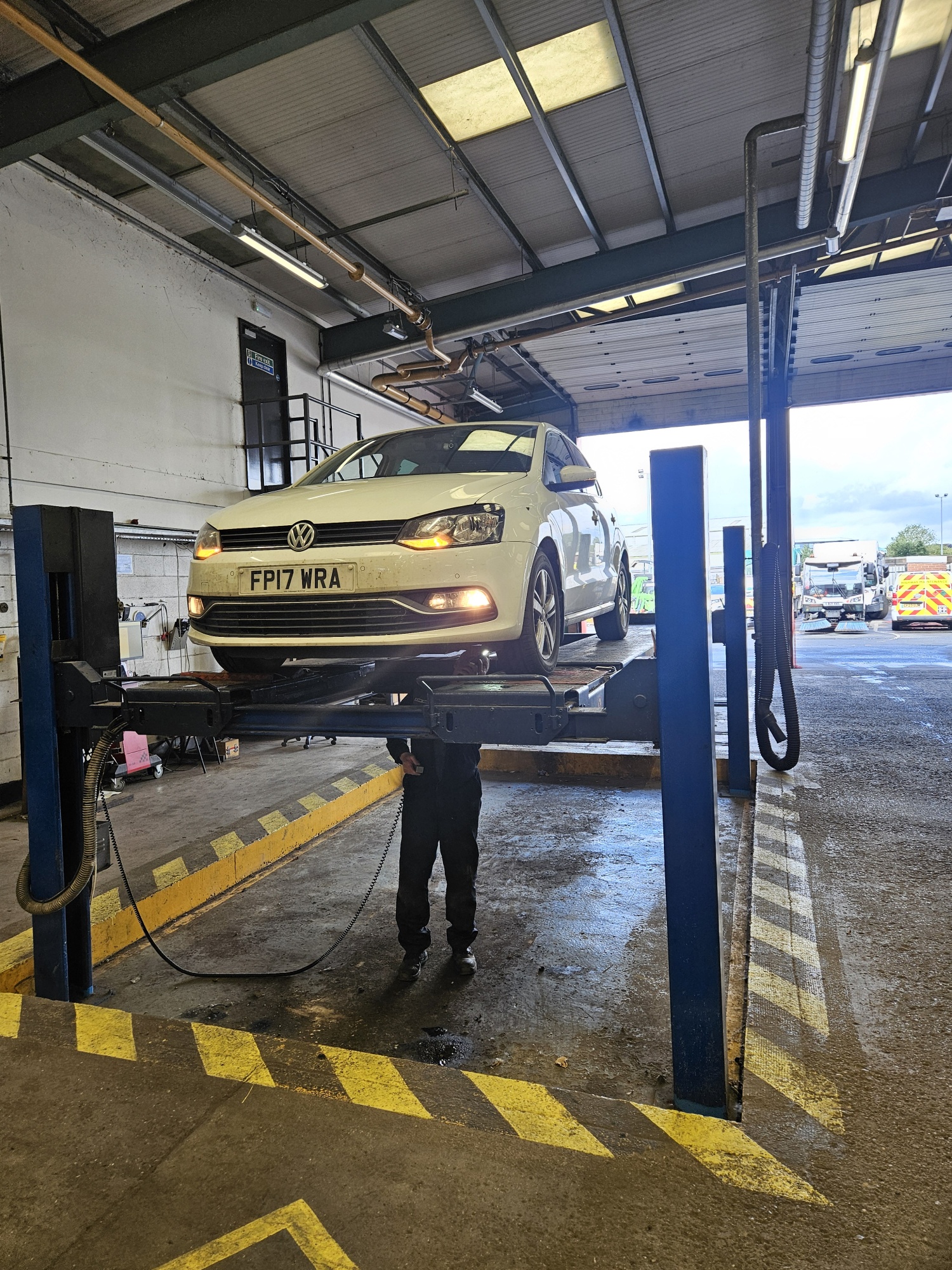
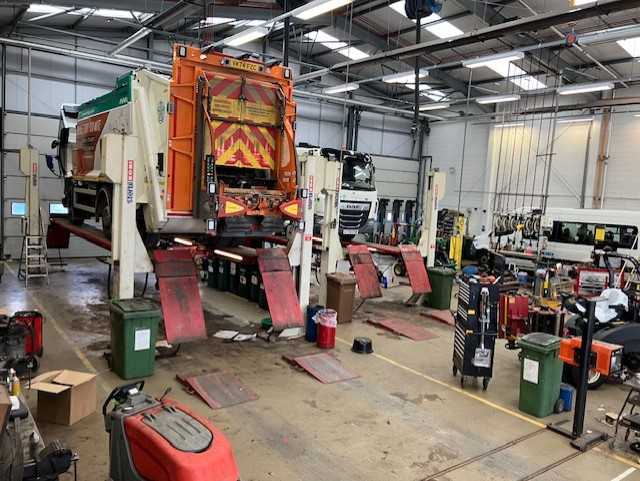
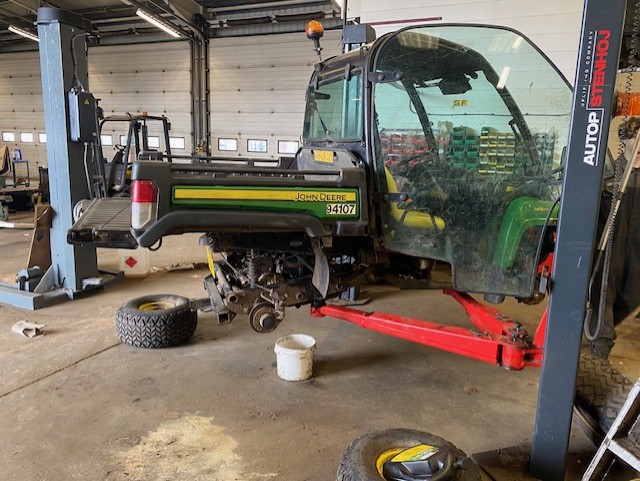
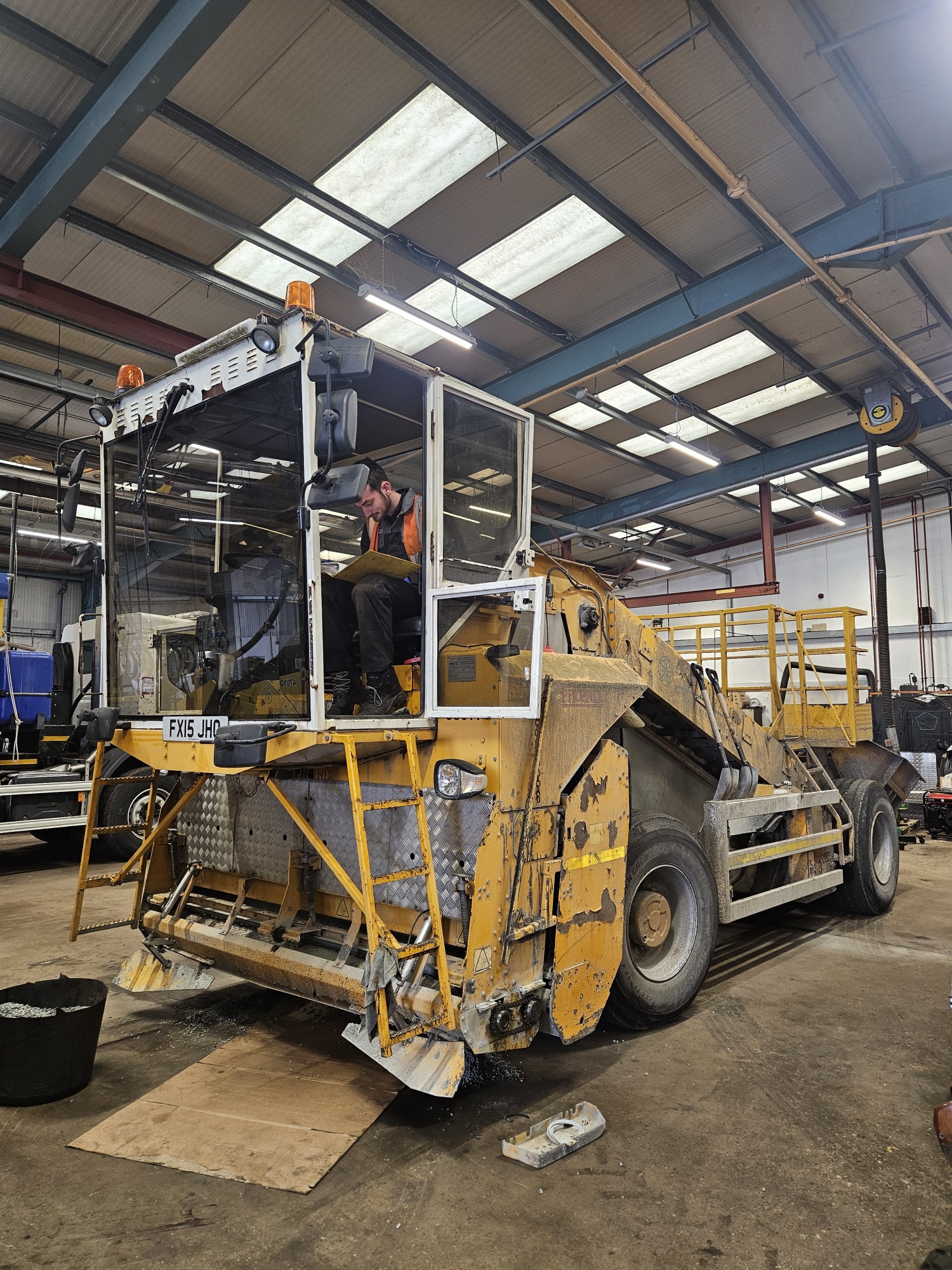
The Vehicle Maintenance Unit within the Fleet Services department is responsible for maintaining and repairing over 650 vehicles and 1,100 plant equipment. This essential function ensures the Council can provide crucial services like refuse collection, school transport, and road gritting.

The fleet is highly diverse, including:

  • Small equipment: lawn-mowers, tractors, woodchippers.
  • Large commercial vehicles: crane lorries, tippers, refuse collection trucks.
  • Specialist equipment: paving machines, road rollers.
  • Standard vehicles: panel vans, minibuses (comprising about half of the fleet).

Jump IN to something new!

Job details

  • HGV Vehicle Technician, £31,067 (£16.10 p/h) - £32,115 (£16.65 p/h) - Grade 5BS.

  • HGV Vehicle Technician Shift Supervisor, £31,586 (£16,37 p/h)- £32,654 (£16.93 p/h) - Grade 6A.

  • 37 Hours per week (Overtime available).

  • Time and a half at weekends and bank holidays.

  • Unsociable hours payment between 8pm and 6am.

  • Depots are spread across East Riding.

  • Application deadline:

The Team

Beverley is the main depot, with a team of 20 dedicated staff members. Each of them reports to the Workshop Manager, ensuring smooth operations and clear communication. The entire team is united in their expertise, working on all categories of vehicles, which creates a dynamic and collaborative environment. This allows them to deliver top-notch maintenance and repair services with precision and consistency.

Who can become a vehicle maintenance technician?

The role is ideal for people:

  • With an NVQ Level 2 or time-served experience.
  • Strong problem-solving skills and attention to detail.
  • Ability to work independently and as part of a team.
  • Good communication skills for interacting with clients and colleagues.
  • Basic computer skills for using diagnostic tools and software.

Benefits at a glance

  • Job Security: Enjoy the stability and peace of mind that comes with working for the Council, where your role is secure and valued.
  • Diverse Vehicle Experience: Work on a range of vehicles, from small plant machinery to HGVs.
  • Flexible Weekends: No mandatory weekend work; optional overtime available.
  • Overtime Opportunities: Additional hours available for those who want them.
  • Competitive Salary: Benefit from a salaried position that offers financial stability and growth opportunities.
  • Work-Life Balance: Our structured shifts ensure you finish work on time, allowing you to maintain a healthy work-life balance.
  • Local government pension benefits

View all benefits

Check out what some of our team, have to say!

In a typical day, you'll work in a clean workshop with a focus on Health and Safety, equipped with PPE and necessary training. The diverse tasks range from maintaining small mowers to servicing refuse lorries and gritters, providing you with valuable experience and knowledge.

You'll receive a wide range of training to improve your qualifications, which are yours to keep. With set day-to-day hours, no weekend work unless desired, and generous holiday entitlement including bank holidays, this is a family-friendly workplace. Specialist tools are provided, and damaged personal tools are replaced.

Charlie

Vehicle Technician shift supervisor

I started at the council as a 16-year-old apprentice and nearly 20 years later am still happy working here. I have qualified as a HGV technician, gained lots of experience working on many different types of vehicles and plant, passed my HGV licence and have been trained in many other areas relating to my job. I have now progressed to supervisor and am still enjoying life at the council learning something new every day.

Helen

Vehicle Technician

I joined the council as an apprentice with limited previous experience in a light vehicle environment. The council put me through my HGV college courses, allowing me to gain a full qualification in HGV Level 3 and an HGV Class 2 driving license. During my apprenticeship at the council, I won the National Apprentice of the Year award. Once qualified, I was offered a full-time employment post.

I briefly left to pursue further HGV knowledge in an HGV retail environment but returned to the council for the more appealing work-life balance it offers. The variety of vehicles and machinery at the council means no two days are the same, which I personally find makes for a more enjoyable work life.

Glenn,

Vehicle Technician

I joined the council in 2019 after working at an HGV main dealer for 15 years. I came to the council for a more varied and interesting type of work. Also, for a different shift pattern which suited my home life better. Since working at the council, I've worked on lots of different plant machinery as well as trucks and light vehicles. I will be quite happy here until I am ready to retire.

Join Us

How to Apply

Please contact the manager to arrange an informal discussion. If the candidate is deemed suitable, we will request their CV. Please select the depot you are most interested in:

Beverley:

Carnaby:

Goole:

About Vehicle Maintenance

You will be working in a clean workshop environment where Health and Safety is a priority. PPE clothing and equipment are provided, along with any required training. The work is very diverse, and every day is different, ranging from working on small mowers to refuse lorries or gritters, as a team player.

You will undergo training in various areas, such as IT and Data Security courses (online), Class 5 MOT testing, HGV, Loler, and Tachograph qualifications, allowing your skill base to expand. Wellbeing is a priority, with flexible working hours, time off for medical appointments, periodic medical checks (e.g. hearing tests), and no weekend working, making this a family-friendly place to work. Specialist tools are provided, and if you damage your own tools, they are automatically replaced. Generous annual leave, which increases after 5 years of service, and bank holidays are included as standard.

Where will you be working?

Modern vehicle maintenance facilities are equipped with advanced diagnostic tools, automated systems, and environmentally friendly technologies to ensure efficient, accurate, and sustainable servicing of vehicles.

Vacancies

Discover why the council is a great place to work