Interview help

Interviews can be a stressful and unnerving experience for most people.

We want to help make the process as painless as possible, so we’ve come up with some helpful hints and tips to remember.

Are you right for the job?

Before writing your application form you should look carefully at both the job outline and the employee specification to determine:

  • What qualifications are essential for the role (if any)
  • What specific skills and knowledge are required to do the job
  • What qualifications, skills and knowledge you have which are relevant
  • Do you meet all the essential criteria? Read about the importance of this below.
Meeting the 'essential criteria'

Your application form needs to demonstrate how you meet ALL of the ‘essential criteria’ from the ‘employee specification’ section of the job listing.

This essential criteria acts as a checklist that the recruiting manager uses to determine if you can be shortlisted for an interview. You must therefore provide working examples for each essential criteria if you want to be invited for an interview.

For example, imagine one of the essential criteria is ‘Experience of delivering training’. Instead of just writing:

'I have experience in providing training to new team members.'

you could make this better by writing:

'I have actively been involved in training new team members, including the creation of a training guide which is used to assist with practical training. This guide is now regularly referred to by all staff, encouraging and promoting skill and knowledge retention.'

Education and qualifications

Contrary to popular belief, you don’t have to list every educational achievement and qualification you have obtained dating back to the beginning of your education. You should however, list all of your education and qualifications that are relevant to the specific vacancy for which you are applying, ensuring you detail any qualifications requested in the essential criteria.

Employment History

Employment history often plays an important part in your application form, especially where the vacancy you are applying for asks for previous experience. It can be a gruelling task to list every job you’ve held over the years and trying to remember every task you were responsible for can be difficult. We’ve put together a few helpful tips to try and make the task easier:

  • List your employment history in reverse chronological order (most recent first and work backwards).
  • If you can’t remember the specific date of your previous employment, just giving the month and year is fine.
  • Any gaps in employment should be fully explained. If you had a gap year, make sure to give the details such as where you went, what you did, who organised it, who funded it and what skills you think you learned as a result of the experience.
  • Try to think about how your gap year, or career break, made you more employable in relation to the job you are applying for.
  • When listing what your job responsibilities were in your previous employment, rather than try to list every duty you had, just emphasise a few key and transferable skills that are most relevant for the job you are applying for.
  • If your employment history is limited, include details of any part-time, temporary, voluntary or work experience you’ve had; especially anything relevant to the job you’re applying for.
References

All new starters to the council are required to have two satisfactory references, one of which should be from your current or most recent employer. To avoid delays later down the line if you are successful, please ensure that you provide accurate referee information in your application form. This should include their:

  • Full name
  • Preferred email address
  • Full postal address, including postcode

Always ensure that you have informed the people you choose as referees to avoid any issues. Although we won’t request your references at the application stage, if you are successful at interview, references will be sought as soon as possible.

Supporting statement - skills, knowledge and experience

When you’re very enthusiastic about applying for a job, it can be easy to get carried away writing a lengthy supporting statement. But it’s important to remember that when shortlisting, managers are only looking for people who can demonstrate the relevant and essential skills needed for the specific job.

So, whilst you may think it a positive thing to write five pages about your wide range of skills and experience, it isn’t an effective use of your time and will not guarantee you an interview.

Here are some hints and tips to help you write the best supporting statement you can:

  • Your supporting statement is the opportunity to sell yourself, so make sure to mention your achievements, knowledge and strengths.
  • Keep the information concise and well structured. Anything you write about needs to be relevant to the job you are applying for so keep it to the point.
  • Give key examples from your previous and current job roles that clearly demonstrate how you meet the criteria for the job.
  • Explain why you want to be considered for the job. This won’t have any bearing on whether or not you are shortlisted but it will demonstrate your passion and enthusiasm for the role.
  • Explain what you could bring to the role if you were appointed.

Your writing style can help to make your application stand out and demonstrate confidence:

  • The use of positive words and power verbs (in moderation), such as ‘effective, motivated, delivered, achieved, transformed, determined etc.’ will help to improve its quality.
  • Explain your relevant skills, knowledge and experience with concise paragraphs and avoid waffle or vague statements.
  • If it helps, use bullet points and sub-headings to make your statement easier to read.

This goes without saying but always check your application form before submitting it - especially your spelling and grammar.

If it helps, ask someone else to check it for you, sometimes they can pick up on things you don’t see.

Application FAQs

We’ve listed some of the more common questions we get asked about job vacancies. If we haven’t answered your question, please .

I have seen a job I am interested in can you give me more information about the position?

The quickest and best way to get more information about a job is to contact the manager whose details should be stated on the advert.

If there isn’t a name and contact details, please get in touch, and we will find somebody to contact you.

I am looking for a specific job relating to my own skills and experience, can you advise me if there are any vacancies available that you think would be suitable for me?

At this time we do not offer a job/skills matching service and would advise that you use the search facility on the jobs page to look for specific job types. You can search for specific jobs via category or by keywords.

You may also find it useful looking at our careers page, which shows the types of careers available at the council. Please note though that these aren’t current vacancies, and are only to illustrate the varying careers we have at the council.

I’ve been told that a specific job vacancy is coming up but I can’t see it on your website. Do you know when it will be advertised?

Unfortunately, we’re unable to provide any details of jobs which aren’t yet advertised. In this instance we would advise that you regularly check the jobs page to make sure you see the job as soon as it is advertised.

I’ve forgotten my username. What should I do?

Your username is normally your email address. If this doesn’t work, please and we can help you.

I’ve forgotten my password. What should I do?

Use the ‘forgotten password’ link on the login screen. You should receive an email within 15 minutes containing a reset link. Please do not press the ‘forgotten password’ button multiple times - this will not speed up the delivery of the email.

If you don’t receive it within 15 minutes, please try the link again.

If it still doesn't come, please .

It is the weekend, I am having issues logging in to the job’s website and a vacancy I’m interested in closes on Sunday evening. I am unable to complete my application on time, what can I do?

Closing dates are generally not changeable unless in exceptional circumstances. If you’re unable to access your account to complete and submit your application, please straight away on Monday morning. We may be able to contact the recruiting manager to see if they will accept a late application due to the circumstances.

I’m already an employee of the council and completing an online application but I can’t see the ‘previous employment’ or ‘qualifications’ section. Is something wrong with the form?

If you’ve noticed there isn’t a ‘previous employment’ or ‘qualifications’ section on the application form this means you are logged in using your council ESS (iTrent) login details. Logging in with these details, rather than with an account you’ve set up at home with a non-eastriding email address, means you won’t have to complete a separate employment or qualifications section on the form. However, you should ensure that any qualifications and experience you have that is relevant to the job you are applying for, is stated in your supporting statement, otherwise the vacancy manager will not be made aware of them.

Ready to apply?

A couple of things to note before you fill in your online application:

  • Adverts close at midnight on the closing date.
  • Data such as personal information and employment history will save when you submit an application form and then pre-fill into the next application form you complete.
  • Free text fields such as ‘skills, knowledge and experience’ page will not be saved and you must re-enter these with each application.
  • Symbols and special characters, such as è or &, must not be used as unfortunately, these can corrupt the data in your application form.
  • You must complete all mandatory fields marked with *.
  • If you are likely to complete several application forms for different vacancies, it can save time to prepare your supporting statement in a Word or notepad document. You can then copy and paste the relevant information into the application form when you are ready.
  • Before you begin, it will save you some time if you have the following information to hand:
    • Your National Insurance number
    • Details of your employment history
    • Your qualifications
    • Referee contact details

Family Help Service

Do you have a passion for working with families? Do you want to make a difference in their lives and help them achieve their goals and dreams? Explore our opportunities within our Family Help Service.

View vacancies

Why Choose Bridlington?

What makes Bridlington a great place?

Bridlington is a welcoming coastal town in East Yorkshire, shaped by its seaside heritage, closeknit community and strong connection to the surrounding landscape. With a relaxed pace of life and a practical town centre offering everyday amenities, it combines traditional coastal character with the benefits of modern living, making it an attractive place to live and work.

Discover more

The Team

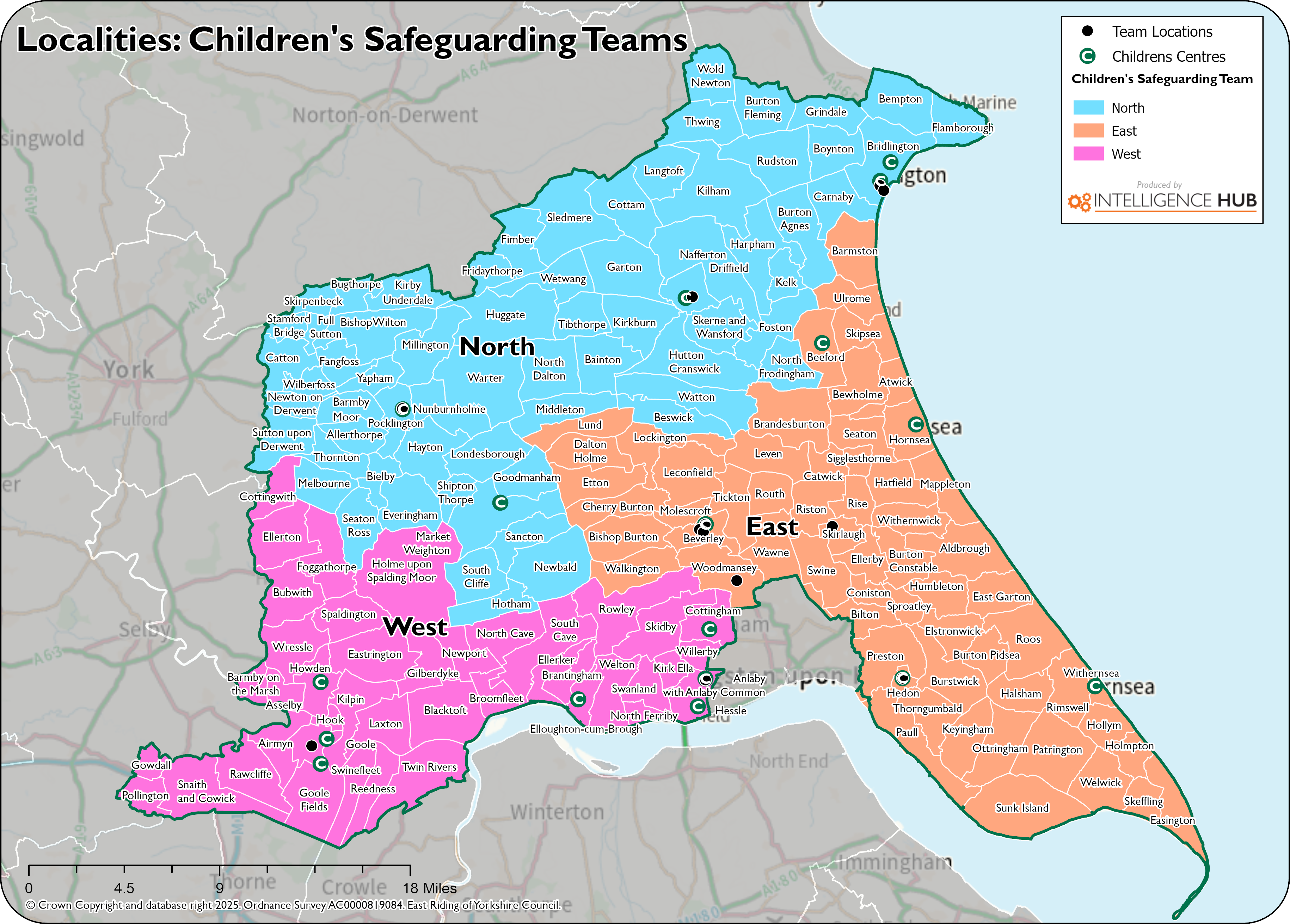
If you're passionate about making a real difference in the lives of children and families, joining one of our locality teams could be your next rewarding step. Each team consists of around 50 dedicated professionals working flexibly across children’s centres, schools, community settings and home environments to deliver consistent, locally tailored support. With strong leadership, a commitment to professional development, and close collaboration with partners including health services, schools, and the voluntary sector, our teams are united by a shared purpose: to provide empathetic, impactful support that truly matters.

  • Early intervention: Working together with families to spot challenges early and build lasting resilience.
  • Support with parenting: Including access to parenting programmes and advice.
  • Help with family relationships: Working with families to build trust, improve communication, and nurture relationships.
  • Access to local services: Signposting to other relevant services such as health, education, housing, and financial support.
  • Working with schools and health services: To ensure a joined-up approach to supporting children and families.
  • Voluntary engagement: Every family is different. We’re here to help find the right support, at the right time.
  • Bringing Families Together: Be part of a team that brings families together through inclusive sessions in our welcoming spaces.
  • Supporting Child Development: Through fun, play based intervention.

Get involved with your community

Role Details

We have various roles within our service from part time to full time.

  • Family Help Practitioner - £30,024 - £30,518 (£15.56 - £15.82 p/h).
  • Family Help School and Community Practitioner - £30,024 - £30,518 (£15.56 - £15.82 p/h).
  • Family Help Universal Practitioner - £30,024 - £30,518 (£15.56 - £15.82 p/h).
  • Family Help Senior Practitioner - £36,363 - £38,220 (£18.85 - £19.81 p/h).
  • Family Help Team Manager (SWQ) (North) - £52,413 - £54,495 (£27,17 - £28.25 p/h)

Locations

  • West - Brough Children's Centre.
  • East - Hornsea Children's Centre.
  • North - Driffield Children's Centre.

Who is the ideal candidate

We're looking for people with experience supporting children, young people, and families. You’ll need to understand the challenges families face and be caring, approachable, and passionate about helping others. Depending on the role, you may need experience in early years, child development, planning support, and listening to children’s voices.

How we work

Agile Working – Flexible, Family-Focused, and Community-Based

The launch of the new service has seen us embrace an agile working model ensuring we remain visible and accessible to the families and communities we serve and brings us together as a team. This is not a home working model, but rather a dynamic approach that enables staff to work from a variety of locations based on service needs. These may include:

  • Designated Children’s Centres.
  • Schools and community venues.
  • Family homes.
  • Outreach settings.
  • Occasionally from home, where appropriate and agreed.

The Family Help offer ensures that support is available across the East Riding for families with children from pregnancy up to age 19, or up to 25 for those with special educational needs.

Check out our roles

Select each role to learn more about them.

School and Community Practitioner

Check out a summary of the role:

  • Support children and families during key transitions in education by working closely with schools, colleges, and community services.
  • Guide and coordinate Early Help Assessments, ensuring families receive the right support and services at the right time.
  • Attend and contribute to multi-agency meetings, helping identify needs early and advising on available services.
  • Promote regular school attendance and emotional wellbeing, working one-on-one or in small groups with children and families.
  • Deliver parenting support and trauma-informed care, including home visits and group sessions to strengthen family resilience.
  • Maintain accurate records and safeguard children, escalating concerns when needed and signposting families to additional support.

Senior Practitioner

Check out a summary of the role:

  • Support families with complex needs by leading assessments, creating tailored plans, and coordinating multi-agency support to improve outcomes and reduce risk.
  • Mentor and guide other practitioners, helping them reflect and improve their practice using strength-based and trauma-informed approaches.
  • Deliver targeted interventions and group programmes for children and parents, using evidence-based tools to address issues early and prevent escalation.
  • Build strong relationships with families and partners, ensuring collaborative responses to local needs and effective communication across services.
  • Take on leadership responsibilities, including deputising for managers and leading on specific service themes like domestic abuse or equality and diversity.
  • Safeguard children and maintain accurate records, escalating concerns when necessary and ensuring families are involved in decisions about their support.

Family Help Practitioner

Check out a summary of the role:

  • Work directly with families to assess needs, create support plans, and coordinate help from different services to improve outcomes and reduce risks.
  • Lead and review family support plans, ensuring the child’s voice is heard and that plans are strength-based and tailored to each family.
  • Build strong relationships with families, encouraging engagement and participation in support services, especially those with complex needs.
  • Deliver parenting support and trauma-informed interventions, including one-to-one and group sessions in homes, schools, and community settings.
  • Identify and respond to safeguarding concerns, following policies and procedures to keep children and families safe.
  • Keep accurate records and work flexibly, including evenings and weekends, to meet the needs of families across East Riding.

Universal Practitioner

Check out a summary of the role:

  • Support families with practical help to meet children’s basic care needs and encourage lasting positive changes at home.
  • Work directly with children and families, delivering individual and group support sessions in various settings including homes, schools, and Children’s Centres.
  • Contribute to assessments and family plans, attend multi-agency meetings, and escalate safeguarding concerns when needed.
  • Ensure the child’s voice is heard, advocating for their needs in all aspects of planning and support.
  • Build strong relationships with families, encouraging participation and helping them manage challenges like behaviour and communication.
  • Keep accurate records and evaluate your work, ensuring best practice and improved outcomes for children and families.
  • Contribute to Best Start in Life Outcomes.

Team Manager

Check out a summary of the role:

  • Lead and manage a team of practitioners delivering early help and targeted support to children, young people, and families across East Riding.
  • Oversee service delivery, ensuring high standards of practice, effective case management, and positive outcomes for families.
  • Support staff development, providing supervision, guidance, and opportunities for continuous learning and improvement.
  • Coordinate multi-agency working, ensuring strong partnerships with schools, health services, and other agencies to meet family needs.
  • Monitor performance and quality, using data and feedback to improve service delivery and ensure compliance with policies and procedures.
  • Promote a trauma-informed and strengths-based approach, embedding these values across the team and wider service.

Benefits at a glance

  • Excellent salary enhancements for unsocial hours working, including:
  • Variety of work locations and no day is the same.
  • A friendly and supportive working environment.
  • Staff discount and health and wellbeing schemes.
  • ERYC offers an excellent pension scheme with an employer contribution 19.3%.

View all benefits

check out what our staff have to say

Heather Barnes

Head of Services Family Help

“Our Family Help service is built on compassion, collaboration, and a deep commitment to supporting children and families across East Riding. We’re proud of our skilled and dedicated team who work tirelessly to deliver early help and targeted support that makes a lasting difference. Whether you're just starting out or bringing years of experience, this is a place where your work truly matters, your development is supported, and your voice is valued. Join us and be part of a service that puts families first and helps build brighter futures.”

Alison Allenby

Family Help Area Manager - West

"Hi, I’m Alison, Area Manager for the West and proud to lead on the universal element of our Family Help service. I joined East Riding as a practitioner, so I know how varied and rewarding this work can be — no two days are the same. I now lead a brilliant, friendly team who are passionate about making a real difference for children and families".

"The best support starts early and our universal offer is all about creating welcoming spaces where families feel connected and supported. Whether it’s play and learn sessions, baby groups, or a chance for parents to connect, children and families are at the heart of everything we do".

"If you’re, creative, and committed to family help, we'd love to hear from you. There's so much happening and so much you can be part of".

Vacancies

See our current vacancies below.

At East Riding of Yorkshire Council we value everyone, find out what we are doing for Equality, Diversity and Inclusion.

Discover why the council is a great place to work