

Interview help

Interviews can be a stressful and unnerving experience for most people.

We want to help make the process as painless as possible, so we’ve come up with some helpful hints and tips to remember.

Are you right for the job?

Before writing your application form you should look carefully at both the job outline and the employee specification to determine:

  • What qualifications are essential for the role (if any)
  • What specific skills and knowledge are required to do the job
  • What qualifications, skills and knowledge you have which are relevant
  • Do you meet all the essential criteria? Read about the importance of this below.
Meeting the 'essential criteria'

Your application form needs to demonstrate how you meet ALL of the ‘essential criteria’ from the ‘employee specification’ section of the job listing.

This essential criteria acts as a checklist that the recruiting manager uses to determine if you can be shortlisted for an interview. You must therefore provide working examples for each essential criteria if you want to be invited for an interview.

For example, imagine one of the essential criteria is ‘Experience of delivering training’. Instead of just writing:

'I have experience in providing training to new team members.'

you could make this better by writing:

'I have actively been involved in training new team members, including the creation of a training guide which is used to assist with practical training. This guide is now regularly referred to by all staff, encouraging and promoting skill and knowledge retention.'

Education and qualifications

Contrary to popular belief, you don’t have to list every educational achievement and qualification you have obtained dating back to the beginning of your education. You should however, list all of your education and qualifications that are relevant to the specific vacancy for which you are applying, ensuring you detail any qualifications requested in the essential criteria.

Employment History

Employment history often plays an important part in your application form, especially where the vacancy you are applying for asks for previous experience. It can be a gruelling task to list every job you’ve held over the years and trying to remember every task you were responsible for can be difficult. We’ve put together a few helpful tips to try and make the task easier:

  • List your employment history in reverse chronological order (most recent first and work backwards).
  • If you can’t remember the specific date of your previous employment, just giving the month and year is fine.
  • Any gaps in employment should be fully explained. If you had a gap year, make sure to give the details such as where you went, what you did, who organised it, who funded it and what skills you think you learned as a result of the experience.
  • Try to think about how your gap year, or career break, made you more employable in relation to the job you are applying for.
  • When listing what your job responsibilities were in your previous employment, rather than try to list every duty you had, just emphasise a few key and transferable skills that are most relevant for the job you are applying for.
  • If your employment history is limited, include details of any part-time, temporary, voluntary or work experience you’ve had; especially anything relevant to the job you’re applying for.
References

All new starters to the council are required to have two satisfactory references, one of which should be from your current or most recent employer. To avoid delays later down the line if you are successful, please ensure that you provide accurate referee information in your application form. This should include their:

  • Full name
  • Preferred email address
  • Full postal address, including postcode

Always ensure that you have informed the people you choose as referees to avoid any issues. Although we won’t request your references at the application stage, if you are successful at interview, references will be sought as soon as possible.

Supporting statement - skills, knowledge and experience

When you’re very enthusiastic about applying for a job, it can be easy to get carried away writing a lengthy supporting statement. But it’s important to remember that when shortlisting, managers are only looking for people who can demonstrate the relevant and essential skills needed for the specific job.

So, whilst you may think it a positive thing to write five pages about your wide range of skills and experience, it isn’t an effective use of your time and will not guarantee you an interview.

Here are some hints and tips to help you write the best supporting statement you can:

  • Your supporting statement is the opportunity to sell yourself, so make sure to mention your achievements, knowledge and strengths.
  • Keep the information concise and well structured. Anything you write about needs to be relevant to the job you are applying for so keep it to the point.
  • Give key examples from your previous and current job roles that clearly demonstrate how you meet the criteria for the job.
  • Explain why you want to be considered for the job. This won’t have any bearing on whether or not you are shortlisted but it will demonstrate your passion and enthusiasm for the role.
  • Explain what you could bring to the role if you were appointed.

Your writing style can help to make your application stand out and demonstrate confidence:

  • The use of positive words and power verbs (in moderation), such as ‘effective, motivated, delivered, achieved, transformed, determined etc.’ will help to improve its quality.
  • Explain your relevant skills, knowledge and experience with concise paragraphs and avoid waffle or vague statements.
  • If it helps, use bullet points and sub-headings to make your statement easier to read.

This goes without saying but always check your application form before submitting it - especially your spelling and grammar.

If it helps, ask someone else to check it for you, sometimes they can pick up on things you don’t see.

Application FAQs

We’ve listed some of the more common questions we get asked about job vacancies. If we haven’t answered your question, please .

I have seen a job I am interested in can you give me more information about the position?

The quickest and best way to get more information about a job is to contact the manager whose details should be stated on the advert.

If there isn’t a name and contact details, please get in touch, and we will find somebody to contact you.

I am looking for a specific job relating to my own skills and experience, can you advise me if there are any vacancies available that you think would be suitable for me?

At this time we do not offer a job/skills matching service and would advise that you use the search facility on the jobs page to look for specific job types. You can search for specific jobs via category or by keywords.

You may also find it useful looking at our careers page, which shows the types of careers available at the council. Please note though that these aren’t current vacancies, and are only to illustrate the varying careers we have at the council.

I’ve been told that a specific job vacancy is coming up but I can’t see it on your website. Do you know when it will be advertised?

Unfortunately, we’re unable to provide any details of jobs which aren’t yet advertised. In this instance we would advise that you regularly check the jobs page to make sure you see the job as soon as it is advertised.

I’ve forgotten my username. What should I do?

Your username is normally your email address. If this doesn’t work, please and we can help you.

I’ve forgotten my password. What should I do?

Use the ‘forgotten password’ link on the login screen. You should receive an email within 15 minutes containing a reset link. Please do not press the ‘forgotten password’ button multiple times - this will not speed up the delivery of the email.

If you don’t receive it within 15 minutes, please try the link again.

If it still doesn't come, please .

It is the weekend, I am having issues logging in to the job’s website and a vacancy I’m interested in closes on Sunday evening. I am unable to complete my application on time, what can I do?

Closing dates are generally not changeable unless in exceptional circumstances. If you’re unable to access your account to complete and submit your application, please straight away on Monday morning. We may be able to contact the recruiting manager to see if they will accept a late application due to the circumstances.

I’m already an employee of the council and completing an online application but I can’t see the ‘previous employment’ or ‘qualifications’ section. Is something wrong with the form?

If you’ve noticed there isn’t a ‘previous employment’ or ‘qualifications’ section on the application form this means you are logged in using your council ESS (iTrent) login details. Logging in with these details, rather than with an account you’ve set up at home with a non-eastriding email address, means you won’t have to complete a separate employment or qualifications section on the form. However, you should ensure that any qualifications and experience you have that is relevant to the job you are applying for, is stated in your supporting statement, otherwise the vacancy manager will not be made aware of them.

Ready to apply?

A couple of things to note before you fill in your online application:

  • Adverts close at midnight on the closing date.
  • Data such as personal information and employment history will save when you submit an application form and then pre-fill into the next application form you complete.
  • Free text fields such as ‘skills, knowledge and experience’ page will not be saved and you must re-enter these with each application.
  • Symbols and special characters, such as è or &, must not be used as unfortunately, these can corrupt the data in your application form.
  • You must complete all mandatory fields marked with *.
  • If you are likely to complete several application forms for different vacancies, it can save time to prepare your supporting statement in a Word or notepad document. You can then copy and paste the relevant information into the application form when you are ready.
  • Before you begin, it will save you some time if you have the following information to hand:
    • Your National Insurance number
    • Details of your employment history
    • Your qualifications
    • Referee contact details

People Services

With a variety of opportunities across the service, could our modern, progressive and inclusive People Services team be the next step of your HR career?

View vacancies

Discover Opportunities in People Services

Helping people thrive. Enabling services to succeed. Shaping the future of East Riding.

People Services is a key strategic partner within East Riding of Yorkshire Council, ensuring the organisation has the people, skills and culture needed to deliver excellent services.

Working across all directorates, we provide expert advice, specialist support and innovative solutions in areas including workforce planning, recruitment, learning and development, organisational development, employee relations, wellbeing, health and safety, payroll, and pay and reward.

Our teams play a vital role in attracting, developing and supporting employees at every stage of their career while helping the Council modernise, transform and meet future challenges. Together, we create positive employee experiences and support the success of services across the Council.

Why Join People Services?

A career in People Services offers the opportunity to work across a broad range of professional disciplines while influencing the future direction of one of the largest employers in the region.

Our teams combine strategic thinking with practical delivery, offering rewarding career opportunities in:

  • Workforce strategy and organisational development.
  • Business partnering and change management.
  • Learning, skills and workforce development.
  • Recruitment and talent attraction.
  • Payroll and pensions.
  • Employee relations and employment law.
  • Health, safety and wellbeing.
  • Equality, diversity and inclusion.
  • Workforce systems, analytics and reporting.
  • Pay, reward and job evaluation.

What we can offer you:

  • A positive, supportive and collaborative team culture.
  • Opportunities for development and progression.
  • Varied and professionally challenging breadth of work.
  • The opportunity to influence meaningful change across the Council.
  • Supportive leadership and a focus on continuous improvement.

Whatever your role, you will be helping to build a workforce that can deliver excellent services for residents today and in the future.

View all benefits

Who are we?

Leadership and Strategy

Our People Services Leadership Team brings together experienced leaders from across the service who provide strategic oversight, drive continuous improvement and ensure the delivery of high-quality services across the organisation.

Working closely with senior leaders, elected members, trade unions and external partners, they help shape the future workforce and ensure People Services remains responsive, innovative and focused on delivering value for the organisation.

Business Partnering, Projects and Change

This team works alongside services across the Council, providing strategic advice and leading organisational change. They help services plan for the future, redesign structures, manage change programmes and resolve complex workforce issues.

Key areas include:

  • Strategic HR business partnering.
  • Organisational design and restructures.
  • Workforce planning.
  • Change and transformation programmes.
  • Employee relations.
  • Complex people case management.
  • TUPE and workforce transitions.
  • Leadership support and coaching.
  • Workforce analytics and insight.
  • Project and programme delivery.

Specialist Services

Our specialist teams provide expert advice, assurance and professional support across a range of disciplines, helping the Council remain compliant, inclusive, safe and supportive.

Key areas include:

  • Employment policy and governance.
  • Employment law advice.
  • Pay, reward and job evaluation.
  • Equality, diversity and inclusion.
  • Occupational health.
  • Health and safety.
  • Employee wellbeing.
  • Performance and accountability frameworks.
  • Workforce reporting and statutory compliance.

Learning, Skills and Workforce Development

Our Learning, Skills and Workforce Development team helps build the skills, knowledge and leadership capability needed for the Council to deliver excellent services now and in the future.

Working with employees, managers, apprentices, schools, employers and partners, the team supports workforce development, organisational learning and future talent across the East Riding.

The team also delivers a wide range of learning, skills and employability programmes for residents, helping people gain qualifications, build confidence, improve essential skills and access employment and career opportunities.

By supporting both the Council's workforce and local communities, the team contributes to organisational performance, workforce resilience, economic growth and improved life chances for residents.

Key areas include:

  • Leadership and management development.
  • Workforce development and organisational learning.
  • Apprenticeships and early careers programmes.
  • Talent and succession planning.
  • Skills development and professional qualifications.
  • Mandatory and statutory learning.
  • Learning technologies and digital learning.
  • Adult learning and skills programmes.
  • A range of employability support programmes.
  • Workforce capability and future skills planning.
  • Learning needs analysis and workforce insight.

Business Services

Business Services provides the essential operational foundations that support every employee and manager across the Council. The team delivers high-quality, customer-focused services that ensure the employee lifecycle runs smoothly from recruitment through to retirement.

Key areas include:

  • Recruitment and resourcing.
  • Talent attraction and employer branding.
  • Executive recruitment.
  • Payroll administration.
  • Pensions administration.
  • HR systems and workforce data.
  • Contracts and onboarding.
  • Employee records management.
  • DBS administration.
  • HR helpdesk services.
  • Recruitment marketing and advertising.

Be Part of Something Bigger

People Services is a collaborative, ambitious and supportive service where every role contributes to the success of the Council and the communities we serve. We influence strategic decisions, support transformational change, develop future leaders, attract talent, strengthen workforce capability and create great employee experiences.

Whether you're an experienced professional or starting the next stage of your career, you'll find opportunities to grow, innovate and make a lasting impact.

Meet the Director of People Services

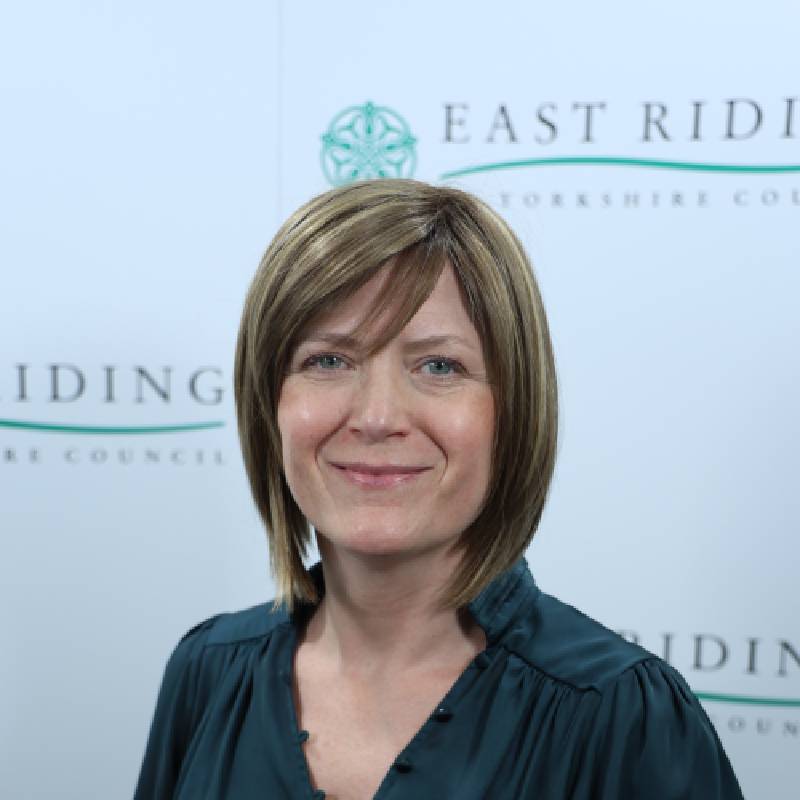
Rebecca King

Rebecca King

Interim Director of People Services

Thank you for your interest in joining People Services at East Riding of Yorkshire Council.

People Services is a strategic enabler at the heart of the organisation, helping to ensure we have the people, skills, leadership and culture needed to deliver excellent services for our residents and communities.

As one of the largest employers in the region, the Council offers an exceptional breadth of careers and professions. Our workforce spans everything from social care, education and public health to highways, planning, digital, legal, environmental services and corporate support. The scale and diversity of our organisation creates unique opportunities for People Services professionals to influence, support and shape the workforce that delivers these vital services.

Within People Services itself, we offer a wide range of career opportunities across workforce strategy, organisational development, business partnering, learning and workforce development, recruitment, payroll, employee relations, health and safety, occupational health, pay and reward, and equality, diversity and inclusion.

Our work is varied, challenging and rewarding. We support organisational change, develop future leaders, promote equality, diversity and inclusion, build workforce capability, attract talent and create positive employee experiences. Every member of our team plays an important role in helping the Council succeed and ensuring that our workforce reflects the communities we serve.

We are committed to creating an inclusive culture where everyone feels valued, respected and able to be themselves at work. We believe that diverse perspectives strengthen our organisation and help us deliver better outcomes for residents.

If you are passionate about people, committed to public service and looking for a career where you can make a genuine difference, I would encourage you to explore the opportunities available within People Services.

We look forward to welcoming talented and dedicated colleagues who share our ambition to make East Riding a great place to work, learn, develop and belong.

The People Strategy

Our aspiration is to have a Modern Workforce in a Modern Workplace - our strategy seeks to ensure that we support our most valuable asset – our people. We need to reflect upon how people now live their lives to ensure that we can respond to new and emerging requirements, ensuring our workforce have the skills they need to deliver great outcomes for our communities, whilst providing the most appropriate workplaces where our employees can thrive in a healthy environment.

The People Strategy

Vacancies

At East Riding of Yorkshire Council we value everyone, find out what we are doing for Equality, Diversity and Inclusion.

Discover why the council is a great place to work